




Blog / Chevrolet Service in El Reno Oklahoma

Chevrolet Service in El Reno, OK: Your Guide to Maintaining Your Chevy

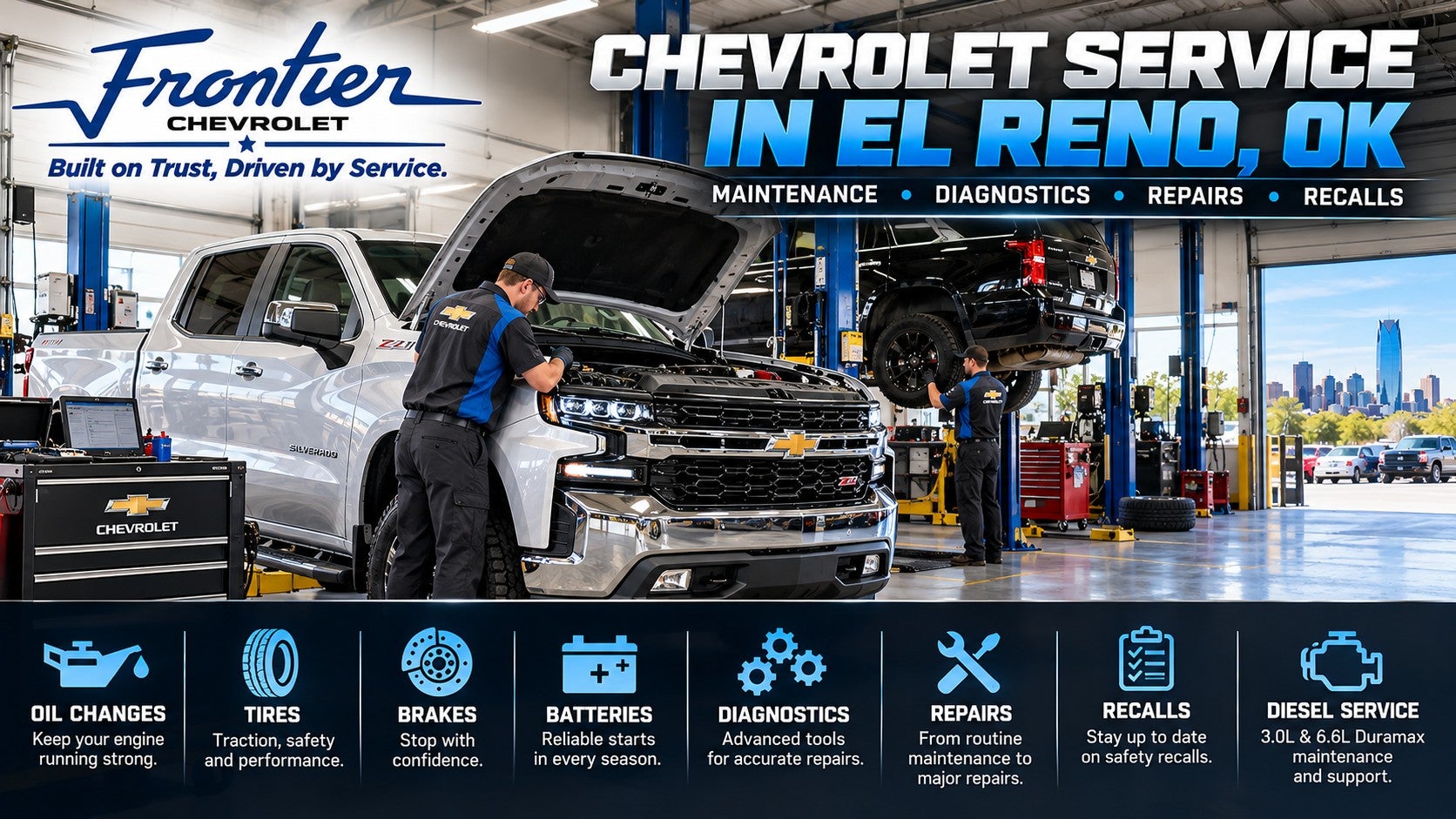
Chevrolet service at Frontier Chevrolet in El Reno, Oklahoma, including oil changes, tires, brakes, diagnostics, repairs, recalls and Duramax diesel service

Chevrolet Service in El Reno, OK: Your Guide to Maintaining Your Chevy


When you depend on your Chevrolet every day, keeping it properly maintained matters.

For Oklahoma drivers, that can mean commuting between El Reno and Oklahoma City, hauling equipment in a Silverado, taking the kids to school in a Traverse, traveling in a Tahoe or Suburban, or simply depending on your vehicle to start every morning.

But vehicle maintenance can also create a lot of questions.

How often should I service my Chevrolet?

Where should I take my Silverado for service?

Can a Chevrolet dealer perform recall repairs?

Does my Duramax require different maintenance?

Should I take my Chevrolet to the dealership or an independent repair shop?

At Frontier Chevrolet in El Reno, Oklahoma, we believe understanding your vehicle is an important part of taking care of it.

This guide is designed to help Chevrolet owners understand routine maintenance, recognize potential problems and know when professional Chevrolet service may be needed.


Where Can I Service My Chevrolet Near El Reno, Oklahoma?


Quick Answer: Chevrolet owners in El Reno and the surrounding Oklahoma City area can schedule maintenance and repair at Frontier Chevrolet in El Reno. Depending on the vehicle and repair needed, Chevrolet dealership service can include routine maintenance, diagnostics, recall repairs, warranty-related repairs and model-specific service.

The right service schedule depends on several factors, including your Chevrolet model, engine, mileage, maintenance history and how the vehicle is driven.

A Silverado used for towing may have different maintenance needs than an Equinox primarily used for commuting.

Likewise, a Duramax diesel Silverado may require different maintenance than a gasoline-powered truck.

That's why good vehicle maintenance starts with understanding your specific Chevrolet rather than following one generic schedule for every vehicle.


What Chevrolet Maintenance Services Should You Pay Attention To?


Routine maintenance isn't just about changing the oil.

Several systems work together to keep your Chevrolet operating properly, and catching wear or maintenance needs early can help prevent larger problems later.

Here are some of the areas Chevrolet owners should monitor.


Engine Oil and Filter


Modern Chevrolet vehicles use an Oil Life Monitoring System that helps estimate when an oil change is needed based on vehicle operation.

Rather than relying solely on a generic mileage interval, pay attention to your vehicle's oil-life percentage and the maintenance information provided for your specific model.

Driving conditions can also affect maintenance needs.

Frequent towing, extended idling, stop-and-go driving, extreme temperatures and other demanding conditions may place additional stress on a vehicle.


Tires


Your tires affect much more than ride quality.

They play an important role in:
  • Traction
  • Braking
  • Steering
  • Fuel efficiency
  • Ride comfort
  • Towing stability

Regularly checking tire pressure, tread depth and overall tire condition can help identify problems before they become more serious.

Uneven tire wear can also be an indication that your vehicle should have its alignment or suspension inspected.


Brakes


Brake components wear gradually, which sometimes makes changes in braking performance difficult to notice.

Warning signs can include:
  • Squealing or grinding
  • Vibration while braking
  • Longer stopping distances
  • A soft or unusual brake pedal
  • Vehicle pulling while braking
  • Brake warning lights

If something about your Chevrolet's braking performance feels different, it's worth having it inspected.


Battery and Charging System


Oklahoma weather can be hard on automotive batteries.

Both summer heat and winter temperature changes can expose a weakening battery.

Slow engine cranking, electrical issues or difficulty starting can indicate that the battery or charging system should be tested.

A battery inspection can be especially valuable before extreme weather arrives.


Fluids


Your Chevrolet relies on several fluids to operate correctly.

Depending on the vehicle, these can include:
  • Engine oil
  • Coolant
  • Brake fluid
  • Transmission fluid
  • Differential fluid
  • Transfer-case fluid
  • Windshield washer fluid
  • Diesel Exhaust Fluid on applicable diesel vehicles

Fluid condition and service intervals vary by vehicle, so the owner's manual and Chevrolet maintenance schedule should be used when determining what your vehicle needs.


How Often Should I Service My Chevrolet?


Quick Answer: There isn't one maintenance interval that applies to every Chevrolet. Service requirements depend on the model, engine, mileage, driving conditions and the vehicle's maintenance schedule.

Modern vehicles provide considerably more information than older vehicles did.

Your Chevrolet may monitor or display information related to oil life, tire pressure, engine systems and other vehicle conditions.

The best approach is to combine that information with your vehicle's recommended maintenance schedule.

And remember that how you drive matters.

A vehicle that spends most of its life cruising down the highway may experience very different conditions than a truck that regularly tows trailers, idles on job sites or travels gravel roads.


Where Should I Service My Chevrolet Silverado?


Silverado owners often ask this question because trucks can have very different workloads.

A Silverado 1500 used primarily as a daily driver isn't necessarily operating under the same conditions as a truck pulling a camper every weekend.

And a Silverado 2500 HD towing equipment or livestock may have completely different demands.
For Silverado owners, maintenance may involve monitoring:
  • Engine oil and filter
  • Tires
  • Brakes
  • Transmission
  • Cooling system
  • Suspension
  • Differential
  • Transfer case on applicable 4WD models
  • Trailer-related components
  • Diesel systems on Duramax-equipped trucks

If you tow regularly, tell your service advisor what you're towing and how frequently you're towing it.

That information provides valuable context when evaluating your truck's maintenance needs.


Does Towing Affect Silverado Maintenance?

Yes. Regular towing can place additional demands on several vehicle systems.

Depending on the truck and operating conditions, towing can increase loads on the engine, transmission, cooling system, brakes, tires, suspension and drivetrain.

That's one reason Silverado owners shouldn't think about maintenance solely in terms of mileage.
How those miles were accumulated matters too.

A truck that has traveled 50,000 mostly unloaded highway miles has lived a different life than a truck with the same mileage that regularly pulls a trailer.

If your Silverado works hard, its maintenance strategy should reflect that.


Where Can I Service a Chevrolet Duramax Diesel?

Chevrolet offers Duramax diesel engines in both light-duty and Heavy Duty Silverado applications, and it's important to understand the difference.

The available 3.0L Duramax Turbo-Diesel in the Silverado 1500 is different from the 6.6L Duramax Turbo-Diesel available in Silverado HD trucks.

Their maintenance requirements should not automatically be treated as interchangeable.
Diesel owners may need to pay particular attention to items such as:
  • Engine oil
  • Fuel filters
  • Diesel Exhaust Fluid (DEF)
  • Cooling system
  • Air filtration
  • Diesel emissions systems
  • Recommended maintenance intervals

If you own a Duramax-equipped Chevrolet, using technicians familiar with Chevrolet diesel systems can be particularly valuable when diagnosing warning messages or performance concerns.


What Is DEF and Why Does My Duramax Need It?

Diesel Exhaust Fluid, commonly called DEF, is used by modern diesel emissions systems to help reduce certain exhaust emissions.

DEF is separate from diesel fuel and is stored in its own reservoir.

If your Duramax uses DEF, it's important not to ignore low-fluid warnings or other messages associated with the emissions system.

A warning message doesn't necessarily tell you exactly what component may need attention.

If you're seeing a DEF or emissions-related warning that doesn't go away after addressing a low-fluid condition, the vehicle may need further diagnosis.


Can Frontier Chevrolet Perform Chevrolet Recall Repairs?


Recall campaigns are an important reason to periodically check your vehicle's VIN for open recalls.
A safety recall can involve a repair, inspection, software update or component replacement specified by the manufacturer.

Recall status is tied to the vehicle identification number (VIN), so two Chevrolet vehicles of the same model year may not necessarily have the same open campaigns.

If you receive a recall notice—or simply want to know whether your Chevrolet has an open recall—having the VIN checked is the best place to start.

If a recall applies to your vehicle, a Chevrolet dealership can determine the applicable repair procedure and parts requirements.


Do I Have to Pay for a Chevrolet Safety Recall?


When a vehicle is covered by an applicable manufacturer safety recall, the specified recall remedy is generally performed without charge to the vehicle owner.

However, it's important to distinguish between a manufacturer recall and unrelated maintenance or repair needs discovered during the visit.

If you're unsure whether a particular concern is associated with an open recall, start by having the VIN checked.


Should I Take My Chevrolet to the Dealership for Service?


There are good independent repair facilities, and not every automotive service has to be performed at a dealership.
But there are situations where Chevrolet dealership service can offer important advantages.

Those can include:
  • Chevrolet safety recalls
  • Warranty-related concerns
  • Model-specific diagnostics
  • Software-related repairs and updates
  • Complex electrical concerns
  • Duramax diesel diagnosis
  • Manufacturer-specific repair procedures
  • Access to Chevrolet vehicle information

The important thing is finding a service facility you trust and giving the technician as much information as possible about the problem you're experiencing.


Can Frontier Chevrolet Service Older Chevrolet Vehicles?

In many cases, yes.

Owning an older Chevrolet doesn't mean you should stop maintaining it.

In fact, as vehicles accumulate mileage, inspections and preventive maintenance can become even more important.

Older vehicles may begin needing additional attention to components such as:
  • Suspension
  • Steering
  • Cooling systems
  • Belts and hoses
  • Batteries
  • Brakes
  • Seals and gaskets
  • Fluids
  • Filters

If you plan on keeping your Chevrolet for several more years, staying ahead of maintenance can be especially valuable.


What Does a Check Engine Light Mean on a Chevrolet?

A check engine light can be triggered by many different conditions.

Some are relatively minor. Others require prompt diagnosis.

The warning light itself usually doesn't provide enough information to determine exactly what has failed.

If the light comes on, pay attention to how the vehicle is running.

If the check engine light is flashing, or the vehicle is running poorly, losing power, overheating or displaying additional warnings, the situation may require more immediate attention.

A diagnostic scan can identify stored trouble codes, but a trouble code is generally the starting point of diagnosis—not automatically proof that a particular part needs replacement.


Chevrolet Service for El Reno and the Oklahoma City Area


Frontier Chevrolet is located in El Reno, Oklahoma, just west of the Oklahoma City metro.

That puts us in a convenient position for Chevrolet owners throughout Canadian County and surrounding communities, including Yukon, Mustang, Piedmont, Kingfisher, Weatherford and western Oklahoma City.

Whether you drive a Silverado, Tahoe, Suburban, Traverse, Equinox or another Chevrolet, the goal should be the same:
Take care of the vehicle before a small maintenance issue becomes a larger repair.


Chevrolet Service FAQs


How often should I change the oil in my Chevrolet?

Follow the maintenance information for your specific Chevrolet and monitor the vehicle's Oil Life Monitoring System when equipped. Driving conditions and vehicle use can affect oil life.


Does towing affect my Silverado's maintenance schedule?

It can. Regular towing may place additional demands on the engine, transmission, cooling system, brakes, tires and drivetrain. Consult the maintenance schedule for your specific truck and operating conditions.


Can a Chevrolet dealer work on my Duramax diesel?

Chevrolet dealerships can service applicable Chevrolet Duramax-equipped vehicles. The 3.0L Duramax used in Silverado 1500 and the 6.6L Duramax used in Silverado HD are different engines with different applications and service requirements.


How do I know if my Chevrolet has an open recall?

Recall status is determined by VIN. Your vehicle's VIN can be checked to determine whether applicable open safety recalls are present.


Can you service a Chevrolet that I didn't buy from Frontier Chevrolet?

Your vehicle does not have to have been purchased from Frontier Chevrolet simply to request service at our Chevrolet service department.


Should I wait until a warning light comes on before servicing my Chevrolet?

No. Preventive maintenance and routine inspections can identify normal wear and maintenance needs before they cause warning lights or drivability problems.


Can older Chevrolet trucks still be serviced at a Chevrolet dealership?

In many cases, yes. Service availability can depend on the vehicle, repair required, parts availability and other factors.


Schedule Chevrolet Service in El Reno, Oklahoma


Whether your Chevrolet needs routine maintenance, you're seeing a warning light, you have questions about an open recall, or something simply doesn't feel right, we're here to help you determine the next step.

At Frontier Chevrolet, our goal isn't simply to repair vehicles when something goes wrong.

It's to help our customers take care of the Chevrolet they depend on every day.

Frontier Chevrolet
1640 E. Highway 66
El Reno, Oklahoma 73036
Built on Trust, Driven by Service.
Schedule your Chevrolet service appointment today.
Posted in:

Recommended Posts

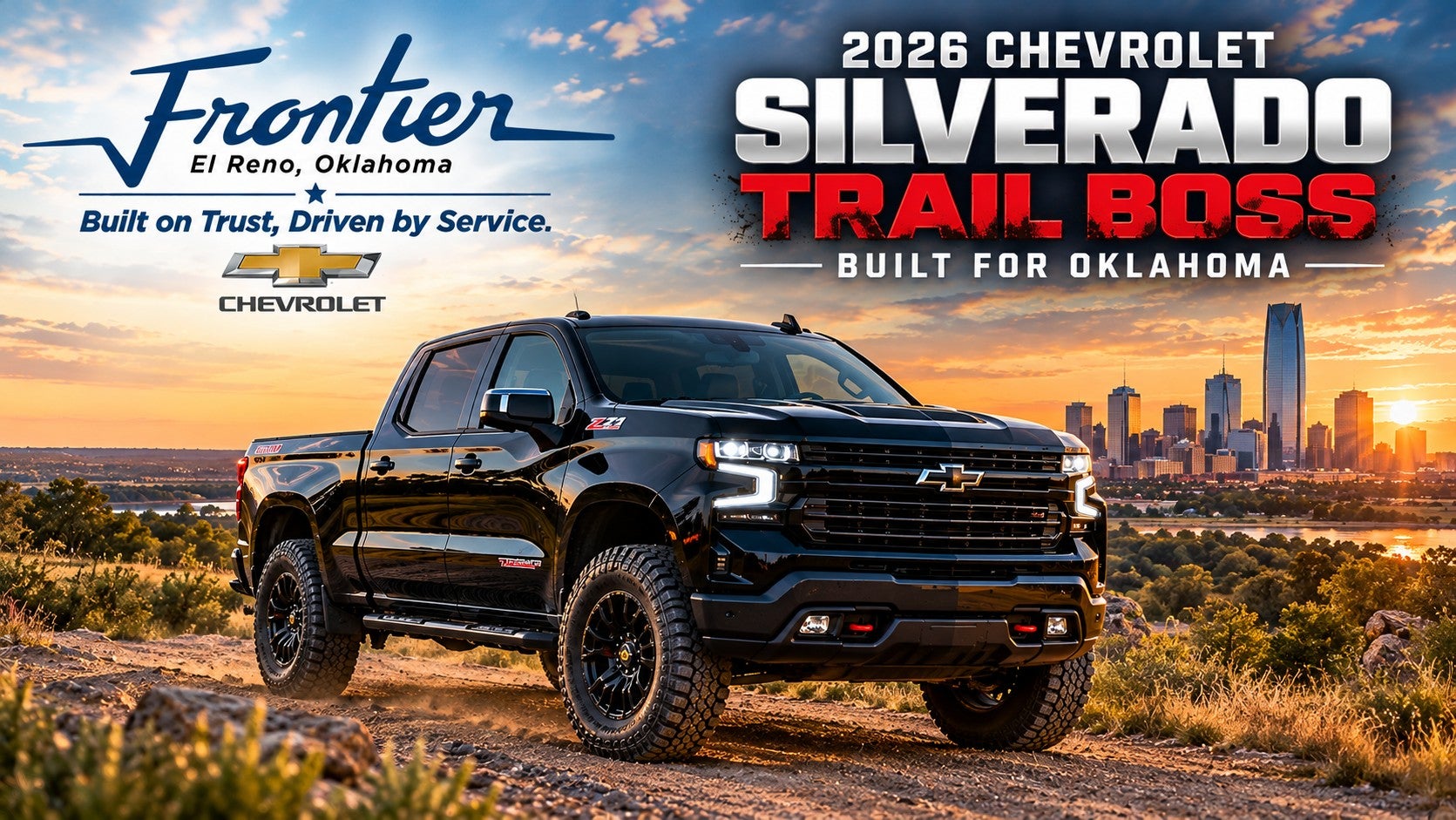
2026 Chevrolet Silverado Trail Boss on an Oklahoma country road with the Oklahoma City skyline near Frontier Chevrolet in El Reno

2026 Chevrolet Silverado Trail Boss in Oklahoma: Custom vs. LT Trail Boss

2026 Chevrolet Silverado Trail Boss in Oklahoma: Custom vs. LT Trail Boss There's something about a Chevrolet Silverado Trail Boss that gets your attention. Maybe it's the factory-lifted stance. Maybe it's the aggressive appearance, black wheels, or the confidence that comes with a truck designed to handle more than pavement. But for Oklahoma truck buyers, the Trail Boss offers something beyond appearance. It's a Silverado built for drivers whose everyday lives don't always happen on paved roads. From gravel roads outside El Reno to hunting property in western Oklahoma, construction sites around Oklahoma City, and weekend adventures beyond the metro, the Silverado Trail Boss offers a combination of off-road capability and everyday truck versatility. The question isn't simply whether you should buy a Trail Boss. It's whether the Custom Trail Boss or LT Trail Boss is the better fit for how you drive. At Frontier Chevrolet in El Reno, Oklahoma, that's where we'd start the conversation. Quick Answer: What's the Difference Between Custom Trail Boss and LT Trail Boss? The 2026 Chevrolet Silverado 1500 offers two Trail Boss trims: Custom Trail Boss and LT Trail Boss. Both include a factory-installed 2-inch suspension lift, Z71 Off-Road Package, Autotrac two-speed transfer case, and automatic locking rear differential. The primary difference is equipment and refinement. The Custom Trail Boss emphasizes off-road capability, aggressive styling, and a more straightforward interior. The LT Trail Boss adds upgraded technology, including a 13.4-inch touchscreen and 12.3-inch digital Driver Information Center, along with additional available comfort and powertrain options. If you want the Trail Boss look and capability without paying for every available interior upgrade, start with the Custom Trail Boss. If you want off-road capability with more technology and refinement, consider the LT Trail Boss. What Makes a Chevrolet Silverado Trail Boss Different? The Silverado Trail Boss isn't simply a standard Silverado with larger tires and different wheels. Chevrolet equips the Trail Boss with factory-installed off-road features designed to improve capability when driving beyond maintained pavement. Both 2026 Trail Boss trims include important equipment such as: 2-inch factory suspension lift Z71 Off-Road Package Autotrac two-speed transfer case Automatic locking rear differential Off-road-oriented suspension Protective underbody equipment Distinctive black exterior accents Raised hood with black insert Off-road-focused wheel and tire combinations These features help distinguish the Trail Boss from a conventional Silverado 1500 4WD. For Oklahoma drivers who regularly encounter gravel, ruts, uneven ground, muddy approaches, or rough access roads, those differences can matter. The Trail Boss is designed to give you additional off-road capability without requiring an aftermarket suspension lift. Custom Trail Boss vs. LT Trail Boss: What's the Difference? Both trucks share the Trail Boss identity, but they're designed to appeal to somewhat different buyers. 2026 Silverado Custom Trail Boss The Custom Trail Boss is a good starting point for buyers who want a factory-lifted Silverado with legitimate off-road equipment. Notable standard features include: 2-inch factory suspension lift Z71 Off-Road Package Autotrac two-speed transfer case Automatic locking rear differential Skid plates 18-inch high-gloss black-painted wheels Goodyear Wrangler Territory MT tires Raised hood with black insert Signature Chevrolet grille The Custom Trail Boss focuses on delivering the essential Trail Boss experience. It's particularly attractive to drivers who prioritize the truck's exterior appearance, off-road equipment, and utility over having the largest available infotainment displays. 2026 Silverado LT Trail Boss The LT Trail Boss builds on the same off-road foundation while adding upgraded interior technology and available equipment. Notable features include: 2-inch factory suspension lift Z71 Off-Road Package Autotrac two-speed transfer case Automatic locking rear differential Raised hood with black insert 20-inch high-gloss black-painted wheels 13.4-inch diagonal infotainment touchscreen 12.3-inch diagonal reconfigurable Driver Information Center Additional available comfort and convenience features The LT Trail Boss is worth considering if you spend substantial time behind the wheel and want a more technology-focused interior. For drivers commuting between El Reno, Yukon, Mustang, and Oklahoma City, those interior differences may become just as important as the truck's off-road capability. Which Trail Boss Is Better for Oklahoma Drivers? The answer depends on how you plan to use the truck. Choose the Custom Trail Boss if: You want the factory-lifted Trail Boss appearance. You regularly drive gravel roads or rural property. You prioritize capability over interior upgrades. You want a more straightforward truck. You prefer the Custom Trail Boss wheel and tire setup. Choose the LT Trail Boss if: You want upgraded interior technology. You spend considerable time commuting or traveling. You want more available comfort features. You're interested in the available 6.2L V8. You want a truck that balances off-road capability with a more refined daily-driving experience. Neither is automatically the better truck. The better Trail Boss is the one that matches your priorities. What Engines Are Available in the 2026 Silverado Trail Boss? Engine selection is another important difference between the two trims. The 2026 Silverado Trail Boss lineup offers several powertrain choices. TurboMax Engine 310 horsepower 430 lb.-ft. of torque The TurboMax engine is standard on both the Custom Trail Boss and LT Trail Boss. It provides substantial standard torque and is paired with an 8-speed automatic transmission. For drivers who want a Trail Boss primarily for daily driving, occasional towing, and recreational use, the TurboMax deserves consideration. 5.3L EcoTec3 V8 355 horsepower 383 lb.-ft. of torque The available 5.3L V8 is offered on both Trail Boss trims. It's a familiar choice for Chevrolet truck buyers who prefer traditional V8 performance. The engine is paired with a 10-speed automatic transmission. 6.2L EcoTec3 V8 420 horsepower 460 lb.-ft. of torque The 6.2L V8 is available on the LT Trail Boss. It is not offered on the 2026 Custom Trail Boss. For buyers who specifically want the larger Chevrolet gasoline V8 in a Trail Boss, this is an important distinction. 3.0L Duramax Turbo-Diesel 305 horsepower 495 lb.-ft. of torque The available 3.0L Duramax is offered on both the Custom Trail Boss and LT Trail Boss. With 495 lb.-ft. of torque, it provides the highest torque output among the Silverado 1500's available engines. For Oklahoma drivers who travel longer distances or regularly tow trailers, the Duramax may be worth comparing against the gasoline engines. Which Trail Boss Engine Should You Choose? Start with how you drive. For daily driving and occasional recreational use, the TurboMax may provide everything you need. If you prefer traditional V8 performance, consider the 5.3L. If you want the available 6.2L V8, look at the LT Trail Boss. If towing and diesel torque are important to you, compare the 3.0L Duramax. Don't choose the engine simply because it has the largest horsepower number. Choose the engine that fits your actual workload. Is the Silverado Trail Boss Good for Oklahoma Gravel Roads? Yes. The Silverado Trail Boss is designed with features that can be useful on gravel roads, uneven surfaces, and certain off-road conditions. The factory suspension lift provides additional ground clearance compared with many conventional Silverado configurations. The two-speed transfer case offers additional four-wheel-drive capability for appropriate low-speed conditions. Off-road tires and protective equipment can also be beneficial when traveling beyond maintained pavement. For Oklahoma drivers who regularly visit hunting leases, rural property, farms, ranches, or undeveloped job sites, these features can be useful. However, no pickup is suitable for every terrain or weather condition. Tire selection, ground conditions, vehicle loading, and driver judgment still matter. A Trail Boss gives you additional capability, but knowing when and how to use it remains important. Is the Silverado Trail Boss Good for Daily Driving? Absolutely, depending on your preferences. One of the advantages of the Trail Boss is that it remains a Silverado 1500. That means it can serve as a family vehicle, commuter, recreational truck, or everyday pickup. For someone who lives in Mustang and commutes to Oklahoma City, the LT Trail Boss may be especially appealing because of its upgraded interior technology. For someone living outside El Reno who regularly travels gravel roads, the Custom Trail Boss may provide the equipment they want without paying for additional interior features. There are trade-offs to consider. A lifted truck can have a different ride, entry height, and fuel economy than a comparable conventional Silverado. Off-road tires may also produce more road noise than highway-oriented tires. That's why we recommend driving both the Trail Boss and a conventional Silverado before deciding. You should enjoy driving your truck on Monday just as much as you enjoy taking it off the pavement on Saturday. Can a Chevrolet Silverado Trail Boss Tow a Trailer? Yes. The Silverado Trail Boss is capable of towing when properly equipped. Depending on the specific truck's engine, drivetrain, configuration, and trailering equipment, it can handle a variety of recreational and work-related trailers. Potential applications include: Fishing boats Utility trailers ATVs and side-by-sides Landscaping equipment Recreational trailers Certain travel trailers Smaller equipment trailers However, there's an important distinction. The overall 2026 Silverado 1500 lineup offers up to 13,300 pounds of maximum available towing capacity. That does not mean every Trail Boss can tow 13,300 pounds. The actual towing rating must be verified for the specific vehicle. If towing is one of your primary reasons for buying a truck, compare the Trail Boss against other Silverado configurations before making your decision. A conventional Silverado 1500 or Silverado HD may be more appropriate depending on your trailer and workload. Silverado Trail Boss vs. Regular Silverado 4WD: What's the Difference? A conventional Silverado equipped with four-wheel drive already provides additional traction capability compared with a two-wheel-drive configuration. The Trail Boss adds a more specialized off-road package. The differences include the factory suspension lift, off-road-focused equipment, appearance, and wheel and tire combinations. For someone who primarily drives paved roads and occasionally encounters snow, rain, or gravel, a conventional Silverado 4WD may be an excellent choice. For someone who frequently travels rougher terrain or wants a factory-lifted truck, the Trail Boss may make more sense. You don't necessarily need a Trail Boss to own a capable four-wheel-drive Silverado. That's an important distinction when comparing price, equipment, and how you'll actually use the truck. Silverado Trail Boss vs. ZR2: Which Is Better? The Silverado Trail Boss and Silverado ZR2 are both designed with off-road capability in mind. However, the ZR2 takes the concept further. The 2026 Silverado ZR2 includes specialized off-road equipment such as: Multimatic DSSV dampers Front and rear electronic locking differentials Large aluminum skid plates 33-inch Goodyear Wrangler Territory MT tires Off-road-cut front bumper Specialized off-road suspension components The Trail Boss provides a factory-lifted Silverado with equipment intended for a broad range of off-road and everyday driving situations. The ZR2 is designed for buyers who want more specialized off-road hardware. For many Oklahoma drivers, the Trail Boss may provide the balance they're looking for. For someone who regularly encounters more demanding off-road terrain, the ZR2 deserves consideration. The question isn't which truck looks more aggressive. It's which level of capability you're actually going to use. Is the Silverado Trail Boss Worth the Money? For the right buyer, it certainly can be. But the value depends on what you're getting and how you'll use it. The Trail Boss includes factory-installed equipment that some buyers might otherwise attempt to add through aftermarket modifications. That can be appealing if you want the factory-lifted appearance and off-road features without arranging separate suspension upgrades. However, if you primarily drive highways, rarely leave maintained pavement, and don't particularly want a lifted truck, another Silverado trim may offer better value for your needs. We recommend comparing the Trail Boss against the Silverado LT, RST, and other available configurations. Look at the actual equipment. Drive the trucks. Consider the engines. Then decide whether the Trail Boss features are worth the difference to you. The right Silverado isn't necessarily the most expensive one. Is the Custom Trail Boss or LT Trail Boss Better for a Family? Both can serve as family vehicles, depending on configuration. The Silverado 1500 offers spacious cab options, modern safety technology, and everyday practicality. For families who regularly travel between El Reno and Oklahoma City, take weekend trips, or spend time at Oklahoma lakes, a Trail Boss can provide both utility and passenger space. The LT Trail Boss may appeal to families who prioritize its larger infotainment display and additional available interior features. The Custom Trail Boss may appeal to families who want the factory-lifted truck without emphasizing those upgrades. We recommend comparing the specific vehicles you're considering, including seating arrangements, available safety features, and passenger comfort. A truck can look great sitting in the driveway. It still needs to work for everyone who rides in it. Should You Buy a Trail Boss or a Silverado 2500 HD? These trucks serve different purposes. The Silverado Trail Boss is a light-duty Silverado 1500 with additional off-road-oriented equipment. The Silverado 2500 HD is engineered for heavier towing and hauling requirements. If you regularly pull large livestock trailers, heavy equipment, substantial campers, or gooseneck trailers, a Silverado HD may be the more appropriate choice. If you want a versatile everyday pickup with additional off-road capability, the Trail Boss deserves a closer look. Don't confuse a factory suspension lift with heavy-duty towing capability. Buy for the workload first. Then choose the appearance and equipment you want. Why Buy a Silverado Trail Boss in El Reno, Oklahoma? Frontier Chevrolet has served El Reno and the surrounding Oklahoma community since 1980. We understand that truck buyers throughout Canadian County and the Oklahoma City metro don't all use their vehicles the same way. A driver commuting from Yukon has different priorities than someone maintaining acreage near Piedmont. A contractor working around Oklahoma City may need something different from a family traveling between Mustang and western Oklahoma. And someone who spends weekends hunting, fishing, or exploring rural Oklahoma may want a different truck entirely. That's why we believe choosing a Silverado should begin with understanding how you intend to use it. At Frontier Chevrolet, we'll help you compare the Custom Trail Boss, LT Trail Boss, and other Silverado configurations based on your actual needs. We'll talk about engines. We'll talk about towing. We'll talk about off-road equipment. And we'll talk about what matters when you're driving the truck every day. The goal isn't to sell you more truck. It's to help you find the right truck. That's what we mean by: Built on Trust, Driven by Service. Frequently Asked Questions About the 2026 Silverado Trail Boss What is the difference between Custom Trail Boss and LT Trail Boss? Both include a factory-installed 2-inch suspension lift and Z71 Off-Road Package. The LT Trail Boss adds upgraded interior technology, including a 13.4-inch touchscreen and 12.3-inch digital Driver Information Center, along with additional available features. Does the Silverado Trail Boss come with a factory lift? Yes. Both the 2026 Custom Trail Boss and LT Trail Boss include a factory-installed 2-inch suspension lift. Is the Silverado Trail Boss four-wheel drive? Yes. The Trail Boss trims feature four-wheel drive with an Autotrac two-speed transfer case. Does the Custom Trail Boss have a V8? Yes. The 2026 Custom Trail Boss offers an available 5.3L EcoTec3 V8. Can you get a 6.2L V8 in a Custom Trail Boss? No. The 2026 Custom Trail Boss does not offer the 6.2L V8. That engine is available on the LT Trail Boss. Can you get a Duramax diesel in a Trail Boss? Yes. The 3.0L Duramax Turbo-Diesel is available on both the Custom Trail Boss and LT Trail Boss. Is the Trail Boss good for towing? Yes, when properly equipped. Actual towing capacity depends on the specific vehicle's engine, configuration, and equipment. Buyers should verify the individual truck's towing and payload ratings. Is a Trail Boss better than a regular Silverado? Not necessarily. The Trail Boss adds off-road-oriented equipment and a factory lift. A conventional Silverado may be a better fit for drivers who prioritize highway driving, towing configurations, or different comfort features. Is the Silverado Trail Boss good for daily driving? Yes. The Trail Boss retains the everyday practicality of a Silverado 1500, although the lifted suspension and off-road tires can affect ride characteristics, entry height, and road noise. What is the difference between Trail Boss and ZR2? The Trail Boss offers factory-installed off-road capability, while the ZR2 adds specialized equipment such as Multimatic DSSV dampers, electronic locking front and rear differentials, and other hardware designed for more demanding off-road use. Where can I buy a Silverado Trail Boss near Oklahoma City? Frontier Chevrolet is located in El Reno, Oklahoma, serving truck buyers from Yukon, Mustang, Oklahoma City, Edmond, Piedmont, Kingfisher, Weatherford, and surrounding communities. Find Your Silverado Trail Boss at Frontier Chevrolet The Custom Trail Boss and LT Trail Boss share the same basic philosophy. Both offer the appearance and capability of a factory-lifted Silverado. The difference comes down to how much technology, comfort, and available equipment you want. Maybe the Custom Trail Boss is everything you need. Maybe the LT Trail Boss is worth the additional investment. Or maybe another Silverado configuration makes more sense for your everyday driving and towing requirements. That's why we encourage you to compare your options before deciding. Tell us how you use your truck. We'll help you find the Silverado that fits. Frontier Chevrolet 1640 E. Highway 66 El Reno, Oklahoma 73036 Built on Trust, Driven by Service.

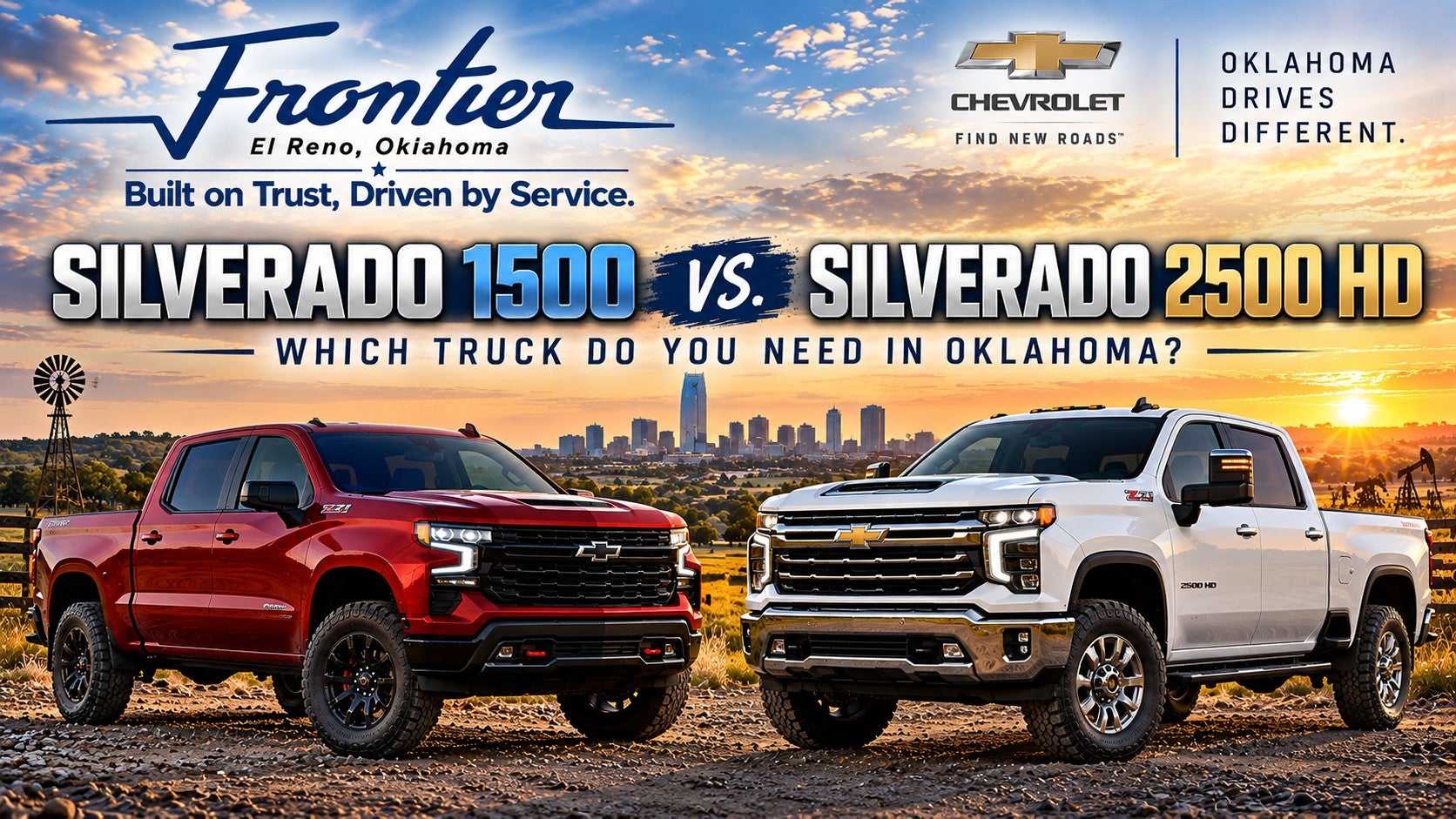
2026 Chevrolet Silverado 1500 vs Silverado 2500 HD comparison for Oklahoma truck buyers at Frontier Chevrolet in El Reno

Chevrolet Silverado 1500 vs. 2500 HD: Which Truck Do You Need in Oklahoma?

Chevrolet Silverado 1500 vs. 2500 HD: Which Truck Do You Need in Oklahoma? Bigger isn’t automatically better. A Chevrolet Silverado 2500 HD can handle jobs a Silverado 1500 simply wasn’t designed to do. But that doesn’t mean every Oklahoma truck owner needs one. For a lot of drivers, the 2026 Chevrolet Silverado 1500 provides more than enough capability while remaining comfortable and practical for commuting, family use and everyday driving. For others—especially drivers pulling heavier campers, equipment trailers, livestock trailers or using their truck hard every week—the 2026 Chevrolet Silverado 2500 HD may make considerably more sense. how do you decide? At Frontier Chevrolet in El Reno, Oklahoma, we’d start with something other than trim levels, wheels or even engines. What are you going to do with the truck? Because that’s what should determine whether a Silverado 1500 or Silverado 2500 HD belongs in your driveway. Quick Answer: Silverado 1500 or Silverado 2500 HD? For most Oklahoma drivers who use their truck for daily driving, family transportation and moderate towing, the Silverado 1500 is the logical place to start. It offers up to 13,300 pounds of available trailering capacity when properly equipped. The Silverado 2500 HD is designed for substantially heavier work. Depending on configuration, it can provide more than 22,000 pounds of maximum available towing capability. The right truck isn't determined by which one has the biggest towing number. Your loaded trailer weight, tongue or pin weight, payload requirements, towing frequency and everyday driving needs should determine which Silverado makes sense. Silverado 1500 Silverado 2500 HD Truck Class Light-Duty Full-Size Heavy-Duty Max Available Towing Up to 13,300 lbs. More than 22,000 lbs., depending on configuration Max Available Payload Up to 2,260 lbs. Higher HD payload capability; varies by configuration Available Diesel 3.0L Duramax 6.6L Duramax V8 Best Fit Daily driving, boats, moderate campers, recreation Heavy trailers, fifth wheels, equipment, ranch and commercial work Everyday Driving More light-duty oriented Built around heavier-duty capability Important: Maximum towing and payload ratings depend on configuration, equipment and options. Always verify the ratings of the specific truck against the actual loaded trailer and cargo. What Is the Real Difference Between a Silverado 1500 and 2500 HD? The biggest difference isn't appearance. It's what the trucks are engineered to do. The Silverado 1500 is Chevrolet's full-size light-duty pickup. It provides a balance of towing, payload, passenger comfort and everyday drivability. The Silverado 2500 HD moves into Chevrolet's heavy-duty truck family. Its chassis, powertrain choices and supporting components are designed around substantially heavier workloads. That distinction matters if your truck spends significant time connected to a trailer. Duty isn't simply an appearance package. It's a different level of truck. How Much Can a 2026 Chevrolet Silverado 1500 Tow? When properly equipped, the 2026 Chevrolet Silverado 1500 offers up to 13,300 pounds of available maximum trailering capacity. That can make an appropriately configured Silverado 1500 capable of handling many common Oklahoma towing jobs, including: Boats Utility trailers ATVs and side-by-sides Lawn and landscaping equipment Many travel trailers Smaller equipment and recreational trailers However, not every Silverado 1500 can tow 13,300 pounds. Actual capability depends on the engine, cab configuration, drivetrain, axle ratio, trailering equipment and other options on the individual truck. Passengers, cargo and accessories matter, too. Oklahoma Truck-Buying Tip Don't shop using the manufacturer's maximum towing number alone. Match the actual truck configuration to the actual trailer. Silverado 1500 vs. 2500 HD: What’s the Real Difference? The Silverado 1500 is Chevrolet’s full-size light-duty pickup. Don’t let the words “light-duty” fool you. A properly equipped 2026 Silverado 1500 can offer up to 13,300 pounds of available trailering capacity and up to 2,260 pounds of available payload. That’s serious capability. The Silverado 2500 HD is a different type of truck. HD stands for Heavy Duty, and the 2500 HD is engineered around heavier workloads, larger trailers and the demands that come with doing those jobs regularly. Depending on configuration, a properly equipped 2026 Silverado 2500 HD can offer maximum available towing capability of more than 22,000 pounds. That’s a major jump. But maximum towing numbers don’t tell the entire story. right truck depends on what you’re towing, how much you’re carrying, how frequently you’re doing it and what the truck does the other 90% of the time. How Much Can a 2026 Silverado 1500 Tow? A properly equipped 2026 Silverado 1500 offers up to 13,300 pounds of maximum available trailering capacity. That means a Silverado 1500 can potentially handle a wide variety of the trailers Oklahoma owners commonly pull: Boats Utility trailers ATVs and side-by-sides Lawn and landscaping equipment Many travel trailers Smaller equipment trailers Recreational trailers But there’s an important word in that sentence: Potentially. Not every Silverado 1500 can tow 13,300 pounds. Engine, cab configuration, drivetrain, axle ratio, trailering equipment and other options affect the rating of an individual truck. Passengers, cargo, options and accessories can also reduce the amount an individual Silverado can safely trailer. That’s why we don’t recommend buying a truck based solely on a maximum number you saw online. We need to match your trailer to your truck. How Much Can a Silverado 2500 HD Tow? This is where the difference becomes obvious. Depending on configuration, the 2026 Silverado 2500 HD can reach maximum available towing capacity of more than 22,000 pounds when properly equipped. That moves you into an entirely different category of capability. Think heavier: Large travel trailers. Fifth wheels. Gooseneck trailers. Livestock trailers. Heavy equipment. Commercial trailers. Farm and ranch equipment. For an Oklahoma owner regularly pulling significant weight, the question eventually changes from: “Can a Silverado 1500 pull it?” to: “Is a Silverado 2500 HD the better tool for doing this regularly?” Those aren’t necessarily the same question. Silverado 1500 or 2500 HD for a Travel Trailer? This is one of the most important questions we hear from truck buyers. And trailer weight alone doesn’t provide the answer. Suppose you’re buying a camper. You find the manufacturer’s listed dry weight and discover that it’s comfortably below your Silverado’s maximum towing capacity. Looks good, right? Maybe. But your camper probably won’t be empty when you’re headed to the lake. You’ve added water. Food. Camping equipment. Chairs. Coolers. Clothing. Propane. Batteries. And everything else that somehow finds its way into a camper. Meanwhile, the truck may be carrying passengers, luggage and gear. That's why we want to know the trailer’s loaded weight and tongue or pin weight, not simply the advertised empty weight. A Silverado 1500 can be an excellent tow vehicle for many recreational trailers. As trailer size and loaded weight increase, however, it becomes increasingly important to compare an appropriately configured Silverado 1500 against a Silverado 2500 HD. Payload Matters Too Towing capacity gets most of the attention. Payload can be just as important. Payload represents the amount of weight the truck itself can carry. That includes more than whatever you throw in the bed. Passengers, cargo and the weight placed on the truck by a trailer all have to be considered when determining whether a particular truck is appropriately configured for the job. The 2026 Silverado 1500 offers up to 2,260 pounds of available payload, depending on configuration. This is another reason a large camper can change the conversation. Your truck may appear to have sufficient towing capacity, but you also need to account for the weight being placed on the truck. That’s especially important with larger travel trailers and fifth wheels. Towing isn’t just about what the engine can pull. Silverado 1500 Engine Choices One advantage of the Silverado 1500 is powertrain choice. For 2026, Chevrolet offers four engines across the Silverado 1500 lineup. TurboMax The TurboMax produces 310 horsepower and 430 lb.-ft. of torque. That substantial low-end torque makes it worth considering for buyers who might otherwise assume they automatically need a V8. 5.3L EcoTec3 V8 The available 5.3L EcoTec3 V8 produces 355 horsepower and 383 lb.-ft. of torque. For many traditional Chevrolet truck buyers, the 5.3L remains a familiar middle ground in the Silverado engine lineup. 6.2L EcoTec3 V8 The available 6.2L EcoTec3 V8 produces 420 horsepower and gives Silverado buyers another option when stronger V8 performance is a priority. 3.0L Duramax Turbo-Diesel The available 3.0L Duramax Turbo-Diesel is particularly interesting for drivers who tow, travel or put substantial highway mileage on their trucks. It produces 305 horsepower and 495 lb.-ft. of torque. And that brings us to another question we hear all the time. Do You Need a Diesel? Maybe. But needing a diesel and wanting a diesel aren’t the same thing. For a Silverado 1500 buyer, Chevrolet’s 3.0L Duramax gives you diesel torque and efficiency without moving into an HD truck. That can be an appealing combination for Oklahoma drivers who travel significant highway miles or tow regularly but don’t require the capability of a heavy-duty pickup. Silverado 2500 HD takes diesel capability considerably farther. Its available 6.6L Duramax Turbo-Diesel V8 produces 470 horsepower and 975 lb.-ft. of torque and is paired with a 10-speed Allison automatic transmission. But don’t automatically assume you need diesel just because you’re buying an HD. The Silverado 2500 HD also offers a 6.6L gas V8 producing 401 horsepower and 464 lb.-ft. of torque. For some HD owners, gas makes perfect sense. For others—especially those frequently towing significant weight or putting serious miles on their truck—the Duramax deserves a closer look. Start with the job. Then choose the engine. Not the other way around. 3.0L Duramax vs. 6.6L Duramax It’s important to understand that these aren’t simply two sizes of the same idea. The 3.0L Duramax is available in the Silverado 1500 and gives buyers a diesel option within a light-duty pickup. The 6.6L Duramax V8 belongs to the Silverado HD family and is designed around substantially heavier-duty applications. If you’re driving from El Reno to Oklahoma City every day and occasionally pulling a camper on the weekend, your needs look very different from someone pulling livestock, construction equipment or a large fifth wheel several times a week. That’s why asking: “Which Duramax is better?” isn’t really the right question. Ask: “Which Duramax fits what I’m actually doing?” Which Is Better for Daily Driving? This is where the Silverado 1500 has a practical argument. A 1500 is still a full-size pickup, but for someone using their truck as a primary vehicle, it generally represents the more everyday-oriented choice. Think about your typical week. Driving to work. School pickup. Grocery store. Dinner in Oklahoma City. Parking lots. Highway trips. Then maybe pulling the boat or camper on Saturday. If that’s your life, don’t overlook the Silverado 1500 simply because a 2500 HD is capable of more. Capability you never use still comes with you everywhere you drive. On the other hand, if towing and hauling are regular parts of your week rather than occasional weekend activities, the additional capability of the 2500 HD becomes much easier to justify. Which Silverado Is Better for an Oklahoma Farm or Ranch? Again, it depends on the work. An Oklahoma ranch owner who uses a pickup primarily to check property, carry tools, travel gravel roads and occasionally pull a smaller trailer may be perfectly served by a Silverado 1500. Another operation may routinely move livestock, hay, tractors, skid steers or other equipment. That’s a very different workload. The same applies to contractors. A Silverado 1500 can be a very capable work truck. But when trailers get heavier and towing becomes part of the truck’s everyday job, the 2500 HD begins earning its name. Heavy Duty isn’t an appearance package. It’s a different level of truck. Do You Need a Silverado 2500 HD for a Fifth Wheel? This is an area where we recommend looking carefully at the actual trailer before selecting the truck. Fifth-wheel trailers place significant weight directly over the truck’s rear axle. So you need to consider more than the trailer’s overall weight. Payload, pin weight, hitch equipment, passengers, cargo and the specific truck configuration all matter. For larger fifth wheels, stepping into an HD truck may become necessary based on those ratings. And depending on the trailer, the conversation may eventually move beyond a 2500 HD and into a Silverado 3500 HD. We’d rather have that conversation before you buy the truck than after you buy the camper. Silverado 1500 or 2500 HD? Start Here Mostly daily driving with occasional towing? Start with the Silverado 1500. You may discover it provides considerably more capability than you expected. Boat, utility trailer, ATVs or moderate camper? Look closely at an appropriately equipped Silverado 1500. Don’t assume you need an HD until we’ve looked at your actual weights. Larger travel trailer with frequent towing? Compare both. This is where payload, tongue weight and specific truck configuration become especially important. Fifth wheel, gooseneck or heavy equipment? Start looking seriously at the Silverado HD family. Heavy trailer several times every week? Don’t shop based only on whether a lighter-duty truck can technically pull it. Buy for how the truck will actually be used. Don’t Buy More Truck Than You Need — Or Less There’s a temptation when truck shopping to buy the biggest thing available. There’s another temptation to stretch a lighter-duty truck as far as its published numbers allow. Neither approach is how we’d recommend buying a Silverado. A 2500 HD isn’t automatically better because it can tow more. A 1500 isn’t automatically the smarter purchase because it’s easier to drive every day. The right truck is the one that comfortably handles the work you’re asking it to do. Don’t buy a 2500 HD because somebody told you that you need a diesel. And don’t buy a Silverado 1500 because a maximum advertised towing number says your trailer technically fits. Match the truck to the job. Why Buy Your Silverado at Frontier Chevrolet in El Reno? Truck buyers around El Reno don’t all use their pickups the same way. Neither do customers coming from Yukon, Mustang, Oklahoma City, Edmond, Piedmont, Kingfisher, Weatherford or western Oklahoma. That’s why our job isn’t simply showing you what’s parked on the lot. It’s helping determine what fits. Tell us: What are you towing? How often are you towing it? How many miles do you drive? What do you carry in the truck? Where do you drive? Is this primarily a work truck, family truck—or both? Those answers can tell us considerably more than asking which Silverado looks best. At Frontier Chevrolet in El Reno, the goal isn’t to sell you more truck. It’s to help you find the right truck. That’s part of what we mean when we say: Built on Trust, Driven by Service. Frequently Asked Questions About Silverado 1500 vs. 2500 HD How much can a 2026 Silverado 1500 tow? A properly equipped 2026 Silverado 1500 can offer up to 13,300 pounds of maximum available trailering capacity. The rating of an individual truck varies based on configuration and equipment. How much can a 2026 Silverado 2500 HD tow? Depending on configuration, a properly equipped 2026 Silverado 2500 HD can offer maximum available towing capability of more than 22,000 pounds. Is a Silverado 2500 HD better than a Silverado 1500? They’re designed for different workloads. The Silverado 1500 provides substantial capability while being oriented toward everyday full-size pickup use. The Silverado 2500 HD is engineered for heavier towing and hauling. Do I need a 2500 HD to pull a camper? Not necessarily. Many campers can be appropriately matched to a Silverado 1500. Trailer weight, tongue weight, truck payload, passengers, cargo and the specific configuration all need to be considered. Is the 3.0L Duramax available in the Silverado 2500 HD? No. The 3.0L Duramax Turbo-Diesel is available in the Silverado 1500. Silverado HD models offer an available 6.6L Duramax Turbo-Diesel V8. Can I get a gas Silverado 2500 HD? Yes. The 2026 Silverado HD offers a 6.6L gas V8 producing 401 horsepower and 464 lb.-ft. of torque. Should I buy a diesel Silverado for towing? It depends on trailer weight, towing frequency, annual mileage and how you use the truck. Both gas and diesel configurations can make sense depending on the job. Is a Silverado 1500 good for towing a travel trailer? It can be. A properly configured Silverado 1500 offers substantial towing capability. The trailer’s loaded weight, tongue weight and the truck’s specific payload and trailering ratings should be checked before towing. Where can I compare Silverado 1500 and 2500 HD trucks near Oklahoma City? Frontier Chevrolet in El Reno, Oklahoma serves Silverado shoppers from El Reno, Yukon, Mustang, Oklahoma City, Edmond, Piedmont, Kingfisher, Weatherford and communities throughout central and western Oklahoma. Find the Right Silverado at Frontier Chevrolet Maybe you need a Silverado 1500. Maybe you need a Silverado 2500 HD. And maybe once we look at your trailer, payload and actual workload, the answer isn’t what you expected. That’s exactly why this conversation matters. Bring us your trailer specifications. Tell us what you haul. Tell us how you use your truck. We’ll help you compare the Silverado 1500 and Silverado HD based on the job—not simply the badge on the fender. Frontier Chevrolet 1640 E. Highway 66 El Reno, Oklahoma 73036 Built on Trust, Driven by Service.

Blue 2026 Chevrolet Silverado 1500 Custom Trail Boss on an Oklahoma landscape near El Reno

Chevrolet Silverado Trail Boss in Oklahoma: What You Need to Know

Chevrolet Silverado Trail Boss in Oklahoma: What You Need to Know Not every Silverado needs to be a Trail Boss. And that's exactly why it's worth understanding what makes one different. For some Oklahoma drivers, a standard Chevrolet Silverado 1500 is everything they'll ever need. But if your normal week includes gravel roads, acreage, job sites, hunting property, muddy county roads—or you simply want the stance and capability of a factory-lifted Chevrolet—the Silverado Trail Boss starts making a lot more sense. The question isn't whether the Trail Boss looks good. The question is whether you're actually going to use what you're paying for. At Frontier Chevrolet in El Reno, Oklahoma, that's where we'd start the conversation. Let's look at what makes a Trail Boss different, the differences between the Custom Trail Boss and LT Trail Boss, available engines, towing considerations and whether one makes sense for the way you actually use your truck. What Is a Chevrolet Silverado Trail Boss? The Silverado Trail Boss is Chevrolet's answer for buyers who want additional off-road capability without having to buy a standard Silverado and immediately start modifying it. The foundation begins with a 2-inch factory suspension lift and Z71 Off-Road Package. Trail Boss equipment also includes features designed specifically for conditions beyond normal pavement, including an Autotrac two-speed transfer case, skid plates, automatic locking rear differential and off-road-oriented tires. That's an important distinction. A Trail Boss isn't simply a Silverado with different wheels, black trim and a decal on the bed. The changes start underneath the truck. And because the package comes from Chevrolet, the suspension, drivetrain and electronic systems are engineered to work together as a complete vehicle. For Oklahoma truck owners who actually leave pavement, that matters. Is the Silverado Trail Boss Good for Oklahoma? Oklahoma may not have the mountain trails people associate with traditional off-roading, but that doesn't mean every road here is smooth pavement. Far from it. Drive very far outside El Reno, Yukon, Mustang or the Oklahoma City metro and conditions can change quickly. Gravel roads. Washboards. Ranch entrances. Oilfield roads. Construction sites. Hunting property. Pastures. Boat ramps. Mud after an Oklahoma thunderstorm. Snow and ice when winter decides to show up. Those are situations where the additional ground clearance, four-wheel-drive hardware and off-road suspension of a Trail Boss can become useful. For someone whose Silverado rarely leaves pavement, those features may not be necessary. But for the driver whose definition of a "road" sometimes gets pretty loose, the Trail Boss deserves a closer look. Custom Trail Boss vs. LT Trail Boss: What's the Difference? This is probably the most important Trail Boss question for many buyers. Both trucks share the basic Trail Boss concept. The bigger difference is how much comfort, technology and available equipment you want wrapped around that capability. Silverado Custom Trail Boss Think of the Custom Trail Boss as the more straightforward approach. You get the aggressive Trail Boss appearance and the factory off-road foundation without moving as far into premium interior equipment. For someone who wants a truck that looks right, works hard and isn't loaded with equipment they don't necessarily need, the Custom Trail Boss can make a lot of sense. It's particularly attractive for an owner who expects the truck to get dirty. Silverado LT Trail Boss The LT Trail Boss takes the same basic idea and moves farther toward everyday comfort and technology. One of the biggest differences is inside the cab, where the LT Trail Boss includes Chevrolet's 13.4-inch diagonal color touchscreen and 12.3-inch diagonal reconfigurable Driver Information Center. It also opens the door to additional available equipment and powertrain choices. That can make the LT Trail Boss especially appealing to someone whose truck has to do two very different jobs: Work hard when needed and still be comfortable enough to drive every day. If you're commuting from Yukon or Mustang into Oklahoma City during the week but heading to property, the lake or a hunting lease on the weekend, the LT Trail Boss starts to make a strong case for itself. How Much Is a Silverado Trail Boss Lifted? The Chevrolet Silverado 1500 Custom Trail Boss and LT Trail Boss feature a 2-inch factory suspension lift. The important word is factory. Instead of buying a standard Silverado and immediately sending it somewhere for aftermarket suspension work, Chevrolet builds the Trail Boss around its lifted configuration. For many buyers, that provides a cleaner way to get the stance and additional capability they're looking for directly from the manufacturer. It also gives the Trail Boss its distinctive appearance. Park one next to a conventional Silverado 1500 and the difference is easy to see. What Engines Are Available in the 2026 Silverado Trail Boss? This is where choosing between Custom Trail Boss and LT Trail Boss gets more interesting. The 2026 Silverado 1500 lineup offers several engines, but availability varies by trim and configuration. TurboMax The TurboMax is standard on both Custom Trail Boss and LT Trail Boss. It produces 310 horsepower and 430 lb.-ft. of torque. That torque number is one reason buyers shouldn't automatically dismiss the TurboMax because it isn't a V8. For everyday driving, truck duty and many recreational uses, it's worth considering based on how you actually intend to use the Silverado. 5.3L EcoTec3 V8 The available 5.3L EcoTec3 V8 produces 355 horsepower and 383 lb.-ft. of torque. For buyers who prefer the characteristics and sound of a traditional Chevrolet V8, the 5.3L remains an important option.  It's available on both Custom Trail Boss and LT Trail Boss. 6.2L EcoTec3 V8 Want more V8? The available 6.2L EcoTec3 V8 produces 420 horsepower and 460 lb.-ft. of torque. For 2026, the 6.2L is available on the LT Trail Boss, but not the Custom Trail Boss. That's one reason someone wanting both Trail Boss capability and Chevrolet's larger V8 may naturally move toward the LT. 3.0L Duramax Turbo-Diesel The available 3.0L Duramax Turbo-Diesel produces 305 horsepower and 495 lb.-ft. of torque. It can be particularly interesting for drivers who put significant mileage on their Silverado or frequently tow. The Duramax is available on both Custom Trail Boss and LT Trail Boss. Rather than choosing an engine because someone tells you it's the one you "have to have," we recommend matching the powertrain to your mileage, towing requirements and how long you expect to own the truck. Can a Silverado Trail Boss Tow? Absolutely—but don't confuse Silverado's maximum advertised towing capability with the capacity of every individual Trail Boss. The overall 2026 Silverado 1500 lineup offers up to 13,300 pounds of available towing capacity when properly equipped. That doesn't mean every Trail Boss can tow 13,300 pounds. Actual capacity depends on the individual truck's engine, configuration, equipment, passengers, cargo and other factors. That's particularly important when shopping for a truck that will have two jobs. Maybe you want Trail Boss capability for your property but also need to pull: A travel trailer A boat ATVs or side-by-sides Lawn equipment A utility trailer Construction equipment Farm or ranch equipment Tell us what you're actually pulling. Better yet, bring us the trailer information and approximate loaded weight. Then we can help determine which Silverado configuration fits the job rather than guessing. Trail Boss vs. Regular Silverado 4WD This is where we can save some customers money. Having four-wheel drive doesn't automatically mean you need a Trail Boss. A conventional Silverado 4WD can already be extremely capable for normal Oklahoma driving. If your truck spends almost all of its life commuting on I-40, sitting in a parking lot and occasionally dealing with bad weather, you may not need the additional off-road equipment. Trail Boss becomes more compelling when you regularly encounter conditions where its equipment actually matters. Think: Standard Silverado 4WD: primarily road use with additional traction when needed. Trail Boss: regular road use combined with more frequent off-pavement driving and a factory off-road setup. There's also the appearance factor. Some buyers simply prefer the taller stance and blacked-out Trail Boss styling. That's perfectly valid too. A truck doesn't have to be a piece of farm equipment to justify owning one. Silverado Trail Boss vs. ZR2 This is another comparison worth understanding. The Trail Boss is an off-road-oriented Silverado. The Silverado ZR2 takes that concept significantly farther. ZR2 adds specialized hardware including Multimatic DSSV dampers, front and rear electronic locking differentials, large underbody aluminum skid plates, 33-inch Goodyear Wrangler Territory MT tires and an off-road-cut front bumper designed to improve approach angle. So which one should you consider? Start with what you're actually going to do. If you want additional factory off-road capability while retaining the versatility expected from an everyday Silverado, Trail Boss may fit your use. If serious off-road performance is a major reason you're buying the truck, then the ZR2 deserves consideration. Don't buy a badge. Buy the capability you're actually going to use. Who Should Consider a Custom Trail Boss? The Custom Trail Boss makes sense for someone who says: "Give me the Trail Boss capability and look without adding a bunch of equipment I don't need." That could include: Contractors Farmers and ranchers Hunters Rural property owners Oilfield workers Outdoor enthusiasts Buyers wanting an aggressive factory-lifted Silverado Someone who expects their truck to actually get used like a truck There's a certain simplicity to the Custom Trail Boss that we think a lot of Oklahoma truck buyers will appreciate. Who Should Consider an LT Trail Boss? The LT Trail Boss becomes more attractive when the truck needs to balance rugged capability with daily comfort. It may be the better fit for someone who spends substantial time behind the wheel, wants the larger digital displays and technology, wants access to the available 6.2L V8, or simply prefers a better-equipped interior. For a buyer who needs one vehicle to serve as work truck, family vehicle, commuter and weekend truck, the LT Trail Boss can cover a lot of ground. Literally and figuratively. Is a Silverado Trail Boss Worth It? It depends. That's probably not the answer you'd expect from a dealership blog, but it's the right answer. If you're never going to use the additional capability and don't particularly care about the Trail Boss appearance, there are other Silverado configurations that may fit you better. But if you regularly travel off pavement, want the additional ground clearance, like having the factory Z71 off-road equipment or simply love the stance of the Trail Boss, then it deserves to be on your shopping list. The point isn't convincing every Silverado buyer to purchase a Trail Boss. It's figuring out whether you're a Trail Boss buyer in the first place. Why Shop Silverado Trail Boss at Frontier Chevrolet in El Reno? At Frontier Chevrolet, we think buying the right truck starts with asking better questions. Not: "How much truck can we sell you?" Instead: "What does your truck need to do?" There's a difference. you're towing, we'll talk about what you're towing. If you're driving 25,000 miles a year, we'll talk about that. If you're spending every weekend on rural property, we'll factor that in. If the Trail Boss doesn't make sense for you, we'll help you compare other Silverado configurations. And if it does make sense, we'll help you decide whether the Custom Trail Boss or LT Trail Boss better fits your needs. That's part of what we mean when we say: Built on Trust, Driven by Service. Frequently Asked Questions About the Silverado Trail Boss What is the difference between a Silverado Z71 and Trail Boss? Trail Boss builds on Chevrolet's off-road equipment with a factory 2-inch suspension lift and a specific combination of off-road-oriented hardware and appearance features. The exact equipment varies by model and configuration. Does the Silverado Trail Boss come with a factory lift? Yes. The Silverado 1500 Custom Trail Boss and LT Trail Boss feature a 2-inch factory suspension lift. Is the Custom Trail Boss or LT Trail Boss better equipped? The LT Trail Boss adds more interior technology and available equipment, including a 13.4-inch diagonal touchscreen and 12.3-inch diagonal Driver Information Center. The Custom Trail Boss takes a more straightforward approach while retaining the Trail Boss off-road foundation. Can I get a V8 in a 2026 Silverado Trail Boss? Yes. The 5.3L EcoTec3 V8 is available on both Custom Trail Boss and LT Trail Boss. The 6.2L EcoTec3 V8 is available on the LT Trail Boss. Can I get a diesel Silverado Trail Boss? Yes. Chevrolet's 3.0L Duramax Turbo-Diesel is available on both the 2026 Custom Trail Boss and LT Trail Boss. Is the Silverado Trail Boss good for daily driving? It can be. Trail Boss models provide additional off-road capability while retaining the everyday practicality of a Silverado 1500. Buyers who spend significant time commuting may particularly want to compare the additional technology and comfort available in the LT Trail Boss. Is Trail Boss the same as ZR2? No. Both are off-road-oriented Silverado models, but the ZR2 uses more specialized off-road hardware, including Multimatic DSSV dampers and electronic locking front and rear differentials. Where can I buy a Silverado Trail Boss near Oklahoma City? Frontier Chevrolet is located at 1640 E. Highway 66 in El Reno, Oklahoma, west of the Oklahoma City metro. We serve Chevrolet truck shoppers from El Reno, Yukon, Mustang, Oklahoma City and communities throughout central and western Oklahoma. Find Your Silverado Trail Boss at Frontier Chevrolet A Silverado Trail Boss doesn't make sense simply because it looks good sitting on the lot. It makes sense when the truck matches your life. Maybe that's a Custom Trail Boss headed down a gravel road every morning. Maybe it's an LT Trail Boss spending Monday through Friday on I-40 and Saturday somewhere pavement doesn't reach. Or maybe after comparing everything, you discover another Silverado configuration makes more sense. That's okay too. At Frontier Chevrolet in El Reno, we'd rather help you buy the right Silverado than simply put you in the most expensive one. If you're shopping for a Chevrolet Silverado Trail Boss near El Reno, Yukon, Mustang, Oklahoma City or elsewhere in central and western Oklahoma, come compare the different Silverado configurations with us. Frontier Chevrolet 1640 E. Highway 66 El Reno, OK 73036 Built on Trust, Driven by Service.